
Experimental Study of the Combined Effects of Operating Parameters of a Diesel Engine under Increasing Exhaust Backpressure Conditions
DOI:
https://doi.org/10.54327/set2026/v6.i1.317Keywords:
diesel engine, combustion, emissions, exhaust backpressure, compression ratio, loadAbstract
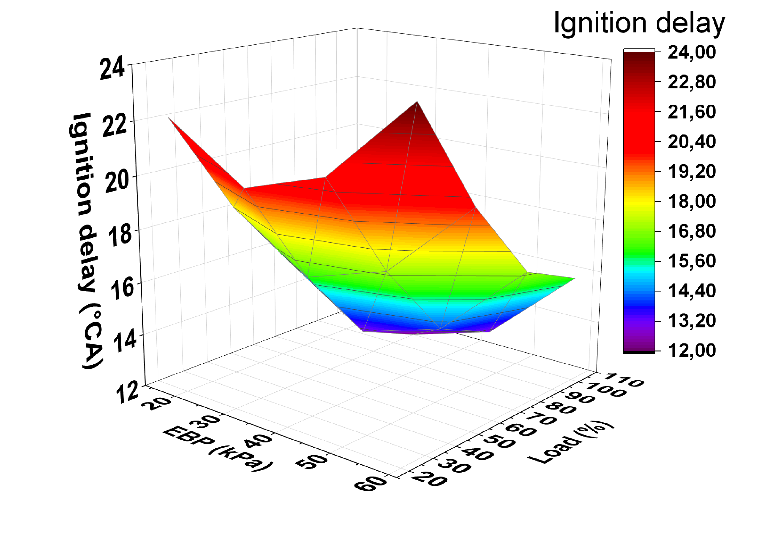
Diesel engines remain widely used in transportation and power generation due to their high efficiency and durability. However, their combustion behaviour, performance, and emissions are strongly influenced by operating conditions such as exhaust backpressure (EBP). This study experimentally investigates the combined effects of compression ratio (CR), engine load, and EBP on combustion characteristics, thermal performance, heat transfer, and emissions of a diesel engine operating at 1 500 rpm. Results show that moderate CR values (14–16) and engine loads of 50–75% enhance in-cylinder pressure, heat release rate, and combustion efficiency. In contrast, excessive CR (18) and high EBP (60 kPa) increase in-cylinder temperature and residual gas fraction (RGF), leading to reduced heat release rates and longer ignition delay. The highest brake thermal efficiency (approximately 33%) is achieved at moderate load and low EBP, whereas high CR and load under elevated EBP reduce efficiency and increase brake-specific fuel consumption. Heat transfer analysis indicates that excessive CR and load significantly raise thermal loads, emphasizing the need for accurate predictive correlations in engine design. Emissions analysis reveals minimal CO and HC at moderate conditions, while NOx and smoke increase under extreme operating regimes. Overall, the findings identify an optimal operating window (CR 14–16, 50–75% load, EBP ≤45 kPa) and provide practical guidance for diesel engine under backpressure constraints, contributing to improved efficiency and emissions control.
Downloads
Downloads
Published
Issue
Section
Categories
License
Copyright (c) 2026 Nhlanhla Khanyi, Riaan Stopforth

This work is licensed under a Creative Commons Attribution 4.0 International License.
Authors are permitted and encouraged to post their work online (e.g., in institutional repositories or on their website, social networking sites, etc).


 © SET Journal