
Strategic Selection of Resilient Pharmaceutical Replenishment Policies: A Human-in-the-Loop (HITL) Z-Number SWOT-VIKOR Framework
DOI:
https://doi.org/10.54327/set2026/v6.iS1.350Keywords:
Human-in-the-Loop (HITL), Large Language Models (LLM), Multi-Criteria Decision Making (MCDM), Pharmaceutical Inventory Routing, Supply Chain Resilience, Z-VIKORAbstract
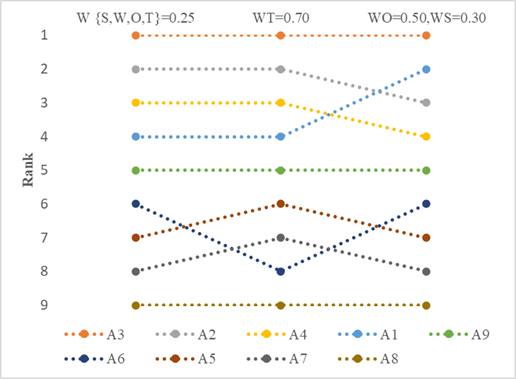
In pharmaceutical logistics, supply chain replenishment policies must balance financial efficiency with systemic resilience. Traditional policy selection relies on cost-centric multi-criteria decision-making (MCDM) frameworks that are susceptible to qualitative biases and hierarchical mathematical distortion. This study proposes a Human-in-the-Loop (HITL) Z-Number SWOT-VIKOR framework, synergizing human strategic governance with AI computational scalability. Human experts establish macro-strategic SWOT weights via the F-CIMAS method, while Large Language Models (LLMs) determine micro-operational weights anchored in CRITIC data variance. Evaluating nine Vendor-Managed Inventory (VMI) policies under stochastic demand, the extended VIKOR algorithm proposed a compromise set of four policies, governed by the hybrid SMT-SSP policy ( ) which strictly minimized individual regret ( ). Methodologically, this study contributes the novel "Strategic Modulation" mechanism, successfully resolving the internal "erasure effect" of classical hierarchical MCDM. By dynamically scaling baseline weights rather than applying strict categorical normalization, this mechanism preserved intrinsic data variance, preventing a statistically significant rank distortion ( ) in mid-tier policies. Furthermore, external mathematical benchmarking against TOPSIS and SAW algorithms proved that VIKOR's non-compensatory regret-minimization is strictly necessary for pharmaceutical logistics. The framework provides supply chain managers with a mathematically protected, bias-resistant blueprint for strategic decision-making in high-stakes healthcare environments.
Downloads
Downloads
Published
Issue
Section
Categories
License
Copyright (c) 2026 Jamal Musbah, Ibrahim Badi

This work is licensed under a Creative Commons Attribution 4.0 International License.
Authors are permitted and encouraged to post their work online (e.g., in institutional repositories or on their website, social networking sites, etc).


 © SET Journal